
How Music Therapy Helps Children with ADHD
Learn how music therapy can help children with ADHD improve attention, emotional regulation, social interaction, and confidence in a fun and supportive environment.
MUSIC THERAPY
7/17/20265 min read
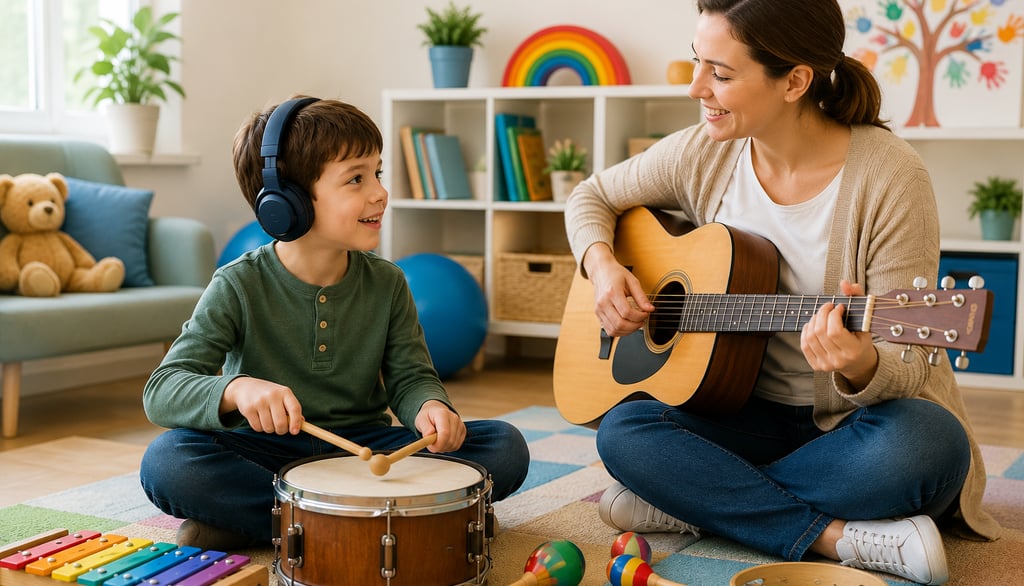
Not every child enjoys sitting at a desk or enjoys talking about how they feel, either.
Some children would much rather explore, move around or discover something with their own hands. For a lot of families, that’s kind of exactly why music hooks their kids' attention. There is no pressure to provide the right answer or to wrap up a task. They can just jump in and follow their own pace, no big deal.
If you’ve been looking around for music therapy for ADHD, chances are you want something that doesn't feel like the usual after-school thing. You’re trying to find a place where your child can have fun, while also getting guidance from someone who truly gets that every child responds differently.
That's the approach we take at Chorus Music Therapy. We don't begin with expectations. We begin with the child.
Why Are Parents Looking Beyond Traditional Activities?
Children don't all switch off in the same way after a busy day. One might head straight for the garden, and another reaches for Lego. Some kind of instinctively turn on music, or start tapping a rhythm on the closest table, like, without thinking much.
These regular little habits actually tell us something meaningful. Children naturally find activities that interest them. That's why our sessions aren't built around making everyone do the same thing.
Instead, we take time to discover:
What does the child enjoy
What captures their attention
How do they like to explore
What helps them feel comfortable
There is no need to rush toward a very particular outcome. But really, getting to know the child is always where it begins.
What Happens During A Music Therapy Session?
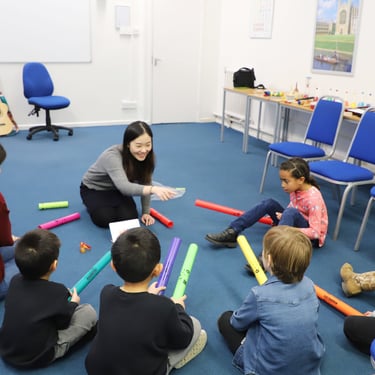
There isn't a lesson plan waiting on a music stand. There aren't songs every child has to learn. Instead, sessions develop through shared musical experiences.
Depending on the child, that could include:
Trying different instruments
Creating simple rhythms
Singing familiar songs
Listening to different sounds
Making music together with the therapist
One child may spend most of the session exploring a drum, and another might be curious about the piano. Some children move between instruments.
Most stick with the one they picked right from the start. That's pretty normal. The session moves along with the child, instead of requiring the child to follow the session.
Can Music Therapy Help ADHD?
It’s a question a lot of families ask before they reach out, just to get a feel for what happens. The truth is, no two children really experience music in the same manner.
So, we don’t really expect every session to look identical, or every child to react in the exact same way.
At Chorus Music Therapy, our qualified therapists tailor each session to the individual, because that way the whole thing feels more natural. We use music as a shared activity, which lets children join in with things that feel comfortable for them, and not be pushed.
That’s why individual music therapy can be such a positive option for families who want a personalised approach and a bit more understanding of how things unfold.
Does Music Always Mean Sitting Quietly?
Not at all, music can be active. It can be playful, it can also be calm.
A child might:
Clap along to a rhythm
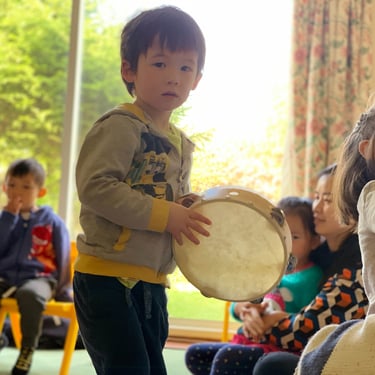
Play a tambourine
Explore the sound of a drum
Join in with a familiar song
Simply listen before taking part
Every response is different.
What matters is that children get the freedom to dabble with music, without feeling like they have to perform or have to get everything dead on, you know.
That’s one of the reasons a lot of families pick music therapy for ADHD. The sessions are built around each child, so there’s room to savour the music in a way that feels pretty natural rather than being pushed at them.
Why Do One-To-One Sessions Make Such A Difference?
Think about something your child really likes, a kind of thing they return to. It might be sketching, making little constructions with blocks, or just kicking a football around in the garden, you know.
Now picture a person showing up every couple of minutes and saying, “It’s time to move on, move along, right now.”
That would not really feel enjoyable at all.
Children are much the same during music therapy. Some are happy to try lots of different instruments. Others find one sound they like and stay with it for most of the session. Neither approach is encouraged nor discouraged.
We simply allow children to explore in the way that feels right for them. That's one of the strengths of individual music therapy. The session isn't built around a fixed timetable. It's built around the child.
Can Music Become Part Of How Children Express Themselves?
Children don't always tell us how they're feeling. Sometimes they show us instead.
You might notice it in the way they play, the way they move, or the way they react to a favourite song. Sometimes it’s kind of obvious, other times you just feel it, not really.
Music gives children another path to share a lived moment without demanding they explain everything in words, like, at all.
During sessions, a child may:
Copy a simple rhythm
Choose the same instrument each week
Join in with a familiar song
Listen quietly before taking part
Take turns making music with the therapist
These moments aren't treated as tests or achievements. They're simply part of getting to know the child and building a relationship through music.
Why Do Families Choose Chorus Music Therapy?
Parents usually want the same thing. They want their child to feel comfortable and understood, and they want support that feels personal rather than rushed.
That's the approach we take at Chorus Music Therapy. Our qualified music therapists spend time understanding each child instead of expecting everyone to respond in the same way.
Every session is shaped around the individual. Some children enjoy energetic musical activities. Others prefer quieter moments. Both are equally valuable because the focus is always on the child, not on following a set routine.
What Should Parents Expect Before The First Session?
Most children don't arrive worrying about whether they'll play the "right" note. Parents often carry those worries instead. The good news is that children don't need any musical experience before they begin.
They don't need to:
Play an instrument
Read music
Sing confidently
Know anything about music
All they need is the opportunity to explore.
We'll take care of the rest by creating a welcoming environment where they can get to know the therapist and discover music in their own way.
So if you’ve been looking around for music therapy for ADHD, you might be hoping for something that actually feels right for your child, not just tossing in yet another task on the weekly schedule, you know.
Music therapy gives a different kind of experience, more like a guided rhythm thing rather than a plain pastime. It gives children time, space and the freedom to explore music without pressure.
At Chorus Music Therapy, our sessions are built around the individual because no two children are exactly alike. Some children enjoy rhythm, some enjoy singing, and others simply enjoy discovering new sounds.
Wherever your child's interests lie, we believe those interests are the best place to begin.
Copyright © 2026 Chorus Music Therapy & Education - All Rights Reserved.
Address
45 Queen Edith's Way,
Cambridge,
United Kingdom
CB1 8PJ
Contacts
Tel no: +44 7751 844300 (Cloris)/
+44 7356 044778 (Admin- Winnie)
Email address: info@chorusmusictherapy.co.uk