
Music Therapy for Dementia: Why Familiar Songs Still Matter
Music therapy for dementia uses familiar songs to support memory, emotional wellbeing, communication and meaningful connection for individuals living with dementia.
MUSIC THERAPY FOR DEMENTIA
5/23/20263 min read
When the loved one in your life suffers from dementia, you notice small things about that individual.
A good day feels important.
A small conversation feels important.
Even a smile can mean a lot.
Families often say this same sort of thing happens with music too: a tune comes on from years ago, and suddenly the person reacts differently… almost like the day gets rewritten. They might start humming, tapping along, or quietly singing under their breath, just a few words.
It does not always go on for very long, but that moment kind of sticks with you.
That’s one reason more people are now searching out music therapy for dementia and paying attention to how music can support someone emotionally while they are living with memory loss.
At Chorus Music Therapy, we offer music therapy sessions for people living with dementia, creating calmer, more supportive spaces where music helps them feel more connected and comfortable.
What Is Music Therapy for Dementia?
Some think that music therapy might be somewhat like taking music classes. But music therapy is definitely far more basic than that.
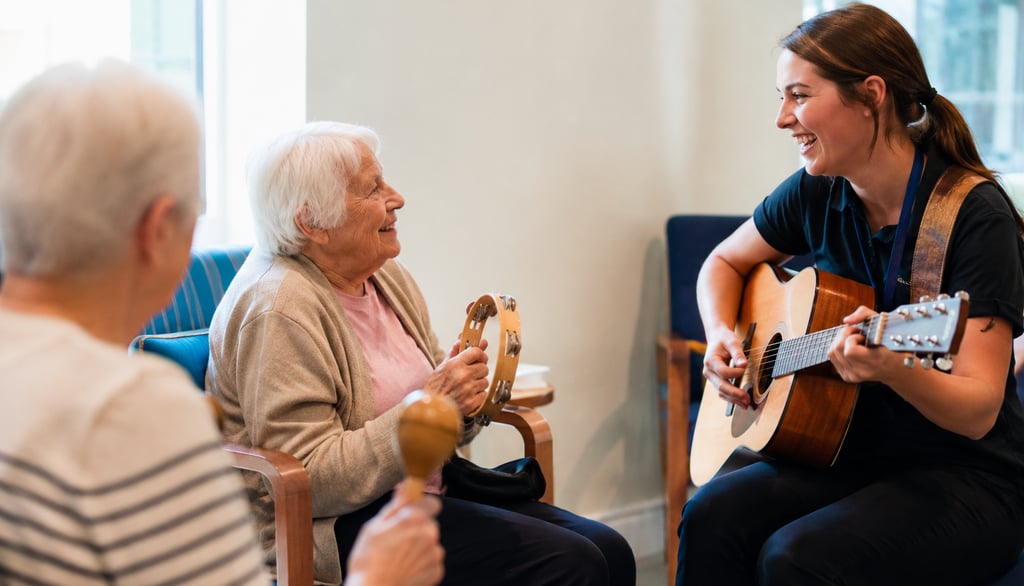
Music therapy for dementia patients utilises music for communication and for enjoyment. A music therapist will facilitate music therapy sessions.
That may include:
Listening to familiar songs
Singing together
Gentle rhythm activities
Using simple instruments
Responding naturally to music
There’s no “right way” to take part.
Some people join in straight away. Some participants prefer listening most of the time. This is perfectly fine, too.
Why Does Music Often Bring Back Memories?
Families notice this all the time.
Someone may struggle to remember parts of the day but still know the words to a song they heard years ago. Certain music can also help people feel calmer because it feels familiar.
That connection is one reason music therapy for dementia has become more recognised within dementia support.
Music can sometimes help encourage:
Emotional comfort
Familiarity
Relaxation
Interaction
Positive engagement
Even small responses can feel meaningful for relatives and carers.
Nobody Has to Be “Good” at Music
This is something families worry about more than they need to.
People often ask:
What if they don’t sing?
What if they just sit there?
What if they were never musical?
That honestly does not matter.
The sessions are not performances, and there’s no expectation for somebody to join in perfectly. Sometimes simply listening to music is enough.
A person smiling during a song or reacting to a familiar tune can already be an important moment.
Funny How One Song Can Change the Mood in a Room
You yourself must have experienced it.
You hear a song which reminds you of someplace, someone, or something from your past.
The same thing may be true of individuals with dementia. Familiar music sometimes creates reactions that ordinary conversation does not.
That’s why many families begin looking into music therapy for dementia after seeing how strongly music affects their loved one at home.
How Are Sessions Kept Personal?
At Chorus Music Therapy, sessions are adapted around the individual rather than following a strict structure.
Every individual’s experience with dementia is unique, and we should make them feel comfortable.
We create a friendly and warm atmosphere around individuals. Depending on the person, sessions may encourage:
Communication
Relaxation
Emotional expression
Shared interaction
Familiarity through music
The aim is not to pressure anyone into participating. It’s simply about creating meaningful moments through music.
Why Do Families Choose Music Therapy?
Many families do not seek anything complex. They just wish for something that will be able to help their loved one feel more at ease or stimulated.
This is when music plays a vital role since it does not depend entirely on memory and talking skills.
The most memorable instances families experience can be the following:
Humming along quietly
Smiling during a familiar song
Looking more relaxed
Reacting positively to certain music
Those things matter more than people realise.
Our Approach at Chorus Music Therapy
We at Chorus Music Therapy know that every person suffering from dementia is different.
We believe that our therapy must be personalised and adaptive. We make use of music in a non-intrusive way according to how comfortable and receptive our client feels.
We work hard to ensure that people enjoy music in a relaxed manner and without any undue pressure placed upon them.
Being diagnosed with dementia changes life for the individual, but not for the music that means something special to him/her.
This is why music therapy for dementia can provide people happiness and solace for the individual and his/her loved ones alike.
At Chorus Music Therapy, we provide music therapy sessions for those suffering from dementia with meaningful musical experiences.
FAQs
1. What is music therapy for dementia?
Dementia music therapy refers to music therapy sessions that assist in improving well-being, interaction, and communication for individuals diagnosed with dementia.
2. Should the person have music skills?
No, anyone without any music background can benefit from music therapy.
3. How could music assist someone with dementia?
Music could be useful in encouraging familiarity, comfort and stimulating engagement.
4. What does a music therapy session involve?
A music therapy session can involve listening to music, singing and some musical activities.
5. Do you offer music therapy sessions for dementia patients?
Yes, we offer music therapy sessions for individuals suffering from dementia.
Copyright © 2026 Chorus Music Therapy & Education - All Rights Reserved.

Address
45 Queen Edith's Way,
Cambridge,
United Kingdom
CB1 8PJ
Contacts
Tel no: +44 7751 844300 (Cloris)/
+44 7356 044778 (Admin- Winnie)
Email address: info@chorusmusictherapy.co.uk