
Music Education in the UK: What Schools and Organisations Need to Know
Understand music education in the UK with key information for schools and organisations, from curriculum structure to student development and engagement.
MUSIC LESSONS
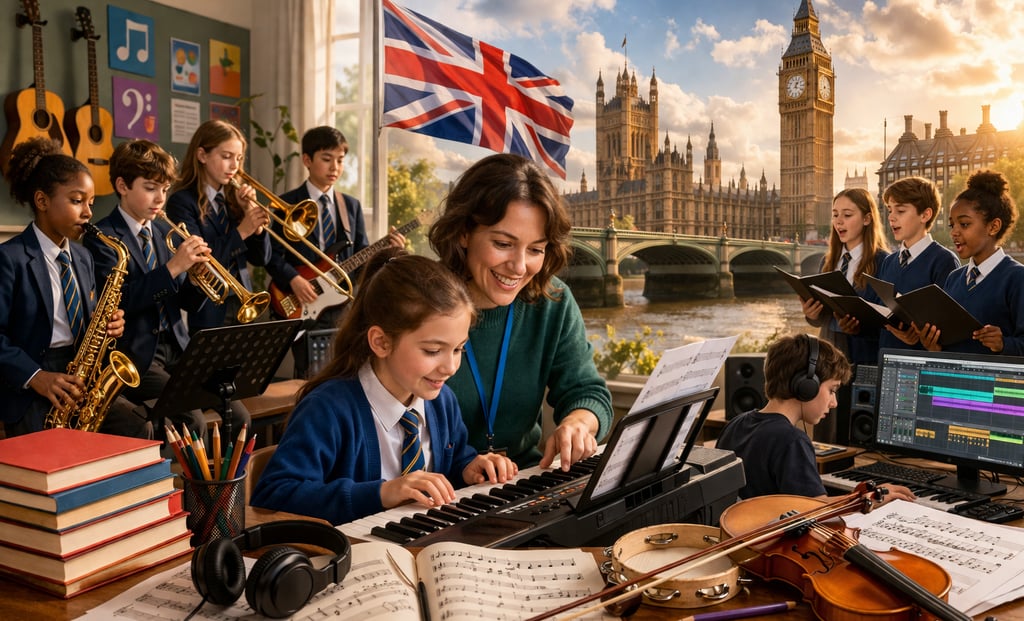
Music has always been a powerful form of expression, but today, it plays a much wider role. It helps build connections, regulate emotions, and strengthen communities in a range of schools, care homes, and organisations. Having seen this first-hand, we can say that music education in the UK is no longer limited only to the classroom environment.
In this blog, we explore what that means for you, whether you're part of a school, a care setting, or an organisation looking to support wellbeing and development through music.
A Fresh Look At Music Education In The UK
Music education in the UK often evokes images of musical instruments, music theory exams, and school recitals. Although these activities remain significant, new developments have emerged within music education.
Today, It Has Become:
More inclusive, reaching individuals with varying needs and abilities
Increasingly well-being-focused, supporting emotional and mental health
Designed to be accessible beyond schools, including care homes and workplaces
This holistic approach to music education offers an opportunity for music to connect all people.
Music Education vs Music Therapy: What’s The Difference?
Understanding the difference is essential when choosing the right approach for your setting.
Music education focuses on learning skills, rhythm, melody, instruments, and performance
Music therapy uses music as a tool to support emotional, cognitive, and social well-being
At Chorus Music Therapy and Education, we combine aspects of both based on individual needs, providing sessions which are fun and meaningful.
Examples Include:
A student may build confidence through interactive music sessions
An elderly participant may reconnect with memories through familiar songs
Staff teams may use rhythm-based activities for stress relief
This integrated approach ensures that music serves a meaningful purpose for every participant.
Practical Options For Schools, Care Homes & Organisations
Should you be looking at music education in the UK, there are several flexible methods that you could use to incorporate it into your surroundings.
For Schools (Including Special Educational Needs Settings)
Tailored group sessions designed around student needs
Sensory-based musical activities for engagement
Support for communication, interaction, and emotional expression
For Care Homes And Elderly Groups
Familiar music sessions that encourage participation
Gentle, inclusive activities that stimulate memory and mood
Opportunities for social connection through shared musical experiences
For Organisations And Teams
Music-led workshops focused on team building
Sessions designed to reduce stress and improve staff wellbeing
Creative activities that encourage collaboration and communication
This shows that music education in the UK isn’t limited to one audience; it’s extremely versatile and applicable to all settings.
How Music Supports Organisational Growth
Apart from individual advantages, music education in the UK is emerging as an effective method of organisational development.
Here’s How:
Improves Team Dynamics: Shared musical experiences naturally encourage listening, cooperation, and trust
Reduces Workplace Stress: Music provides a structured yet relaxing outlet for releasing tension
Boosts Morale And Engagement: Creative sessions break routine and re-energise teams
Encourages Inclusivity: Music removes barriers so that everyone can participate, regardless of experience
For organisations looking for more effective programmes, music brings a fresh approach to well-being efforts.
Accreditation And Professional Standards Matter
When choosing someone for music education in the UK, it is vital to consider professional standards and experience.
Look For:
Practitioners with relevant training and experience
Safeguarding awareness and structured session planning
A clear understanding of different participant needs
Here at Chorus Music Therapy and Education, all our sessions are founded on best practices, meaning each session is both safe and beneficial to the participants.
Choosing The Right Music Programme
Not all music services are the same, so how do you choose the right one?
Below are some of the issues that may help you as you search for suitable music education in the UK.
Is it personalised?
Sessions should be tailored to your group, rather than following the standard scheme.
Does it align with your goals?
Whether you aim for wellbeing, engagement, or development, the programme must fit your purpose.
Is it inclusive?
The most successful programmes guarantee the involvement of every participant.
Is there a balance of structure and creativity?
Well-structured programmes should strike a perfect balance between supervision and creativity.
It takes a while to examine all these aspects and find a really valuable programme.
Why Music Matters More Than Ever
With increasing demands for holistic services in educational institutions, healthcare settings, and the workplace, music education in the UK has shown its significance.
It’s Not Just About Learning Music; It’s About:
Supporting emotional wellbeing
Building connections
Creating positive, shared experiences
And, most importantly, meeting the individual where they are, be it a classroom, care facility, or workplace environment.
A Meaningful Step Forward With Music
Music education in the UK is much more than merely learning. It has an influence not only on one’s wellbeing and ability to connect but also on the way people develop.
Here at Chorus Music Therapy and Education, we pride ourselves on delivering tailored sessions for each different group of people who need our help. Get in touch with us today to explore a tailored music programme for your setting.
Frequently Asked Questions
1. What is contemporary music education in the UK?
It incorporates conventional instruction alongside wellbeing-oriented and inclusive techniques in different environments.
2. What can music contribute to staff working within organisations?
It can help decrease stress, enhance cooperation, and increase general morale.
3. Is music therapy good for SEN pupils and the elderly?
Yes, it is effective because of special sessions that make it interesting and beneficial for them.
4. How do we find an appropriate provider?
Look for tailored sessions, professional standards, and experience with your specific audience.
Copyright © 2026 Chorus Music Therapy & Education - All Rights Reserved.
Chorus Music Therapy & Education Ltd (Company No. 15217688) · VAT Registered: (VAT No. GB 518654961) · Chorus Music Therapy CIC (Company No. 16755615)



Address
45 Queen Edith's Way,
Cambridge,
United Kingdom
CB1 8PJ
Contacts
Tel no: +44 7751 844300 (Cloris)/
+44 7356 044778 (Admin- Winnie)
Email address: info@chorusmusictherapy.co.uk