
Music Classes for Kindergarteners: Helping Little Ones Enjoy Learning Through Music
Music Classes for Kindergarteners: Helping Little Ones Enjoy Learning Through Music designed to build confidence, creativity, and early developmental skills through fun, interactive sessions.
MUSIC LESSONS CAMBRIDGE
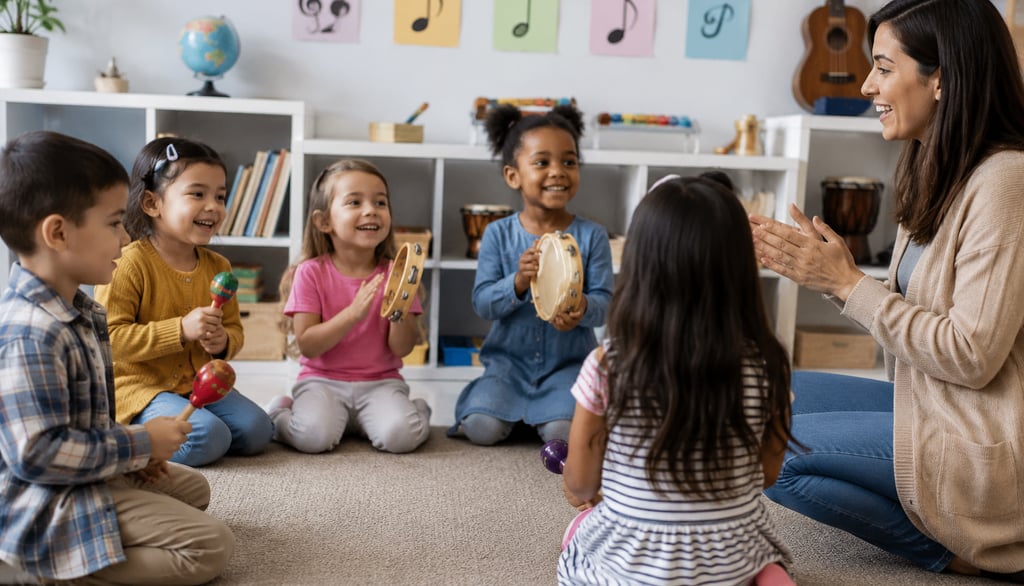
Ask any parent what happens when their child hears a favourite song, and you’ll probably get a little smile before you even get an answer.
Most children don't stop to think about it. They just react. One starts clapping, another starts spinning around the room, and before long, half the children are singing words that don't even make complete sense. Somehow, they all know exactly when to join in.
It’s one of those things that feels totally natural.
That’s also why so many families start looking at music classes for kindergarteners. Nobody is assuming their child will turn into a musician overnight. Most parents just want their little one to enjoy it, and to have a place where they can sit in, take part too, meet other children and have a good time together.
The interesting part comes later.
Quite often, parents tell us they've noticed little changes at home. Their child is singing songs they learnt during the week, remembering actions, asking to play musical games or showing more confidence joining in with other activities.
Nobody sat them down to teach those things. They happened while the children were busy enjoying themselves. That's exactly how we like it at Chorus Music Therapy.
Why Does Music Feel So Easy for Young Children?
Children don't wake up hoping to practise memory or communication. They wake up wanting to play. Music fits naturally into that world.
Think about how often children make up songs without anyone asking them to. They'll sing while building towers, making pretend cups of tea or walking around the supermarket. Sometimes they’re singing words they made up on their own. Nobody really tells them to do that. It’s just how many kids explore the world. That’s one reason music works so well in the kindergarten years.
Instead of asking children to sit quietly and focus for long stretches, music classes for kindergarteners let them move, listen, giggle and take part. The learning almost slips in unnoticed.
What Are Music Classes Actually Like?
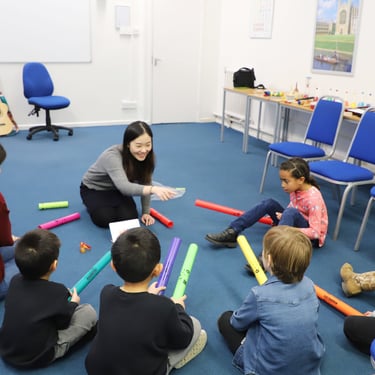
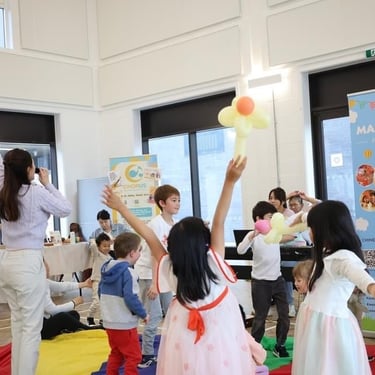
Each music class for kindergarteners has its own vibe. Some days, the room is really buzzing even before we’ve actually started. Children drift in through the door, chatting away. They spot instruments they want to have a go at, and they say hello to friends from last week, like it’s no big thing at all.
Other times it’s much calmer. A couple of children might need a bit of pacing first, before they feel fully settled. That’s totally normal. We don’t think every session has to follow the same routine, because children don’t come in feeling the same way every week, not even close.
We build our sessions around the children rather than expecting the children to fit around a timetable. Some days that means plenty of singing. On another day, everyone becomes fascinated by rhythm games. Occasionally, the biggest excitement is deciding who gets to play the drum first.
Those little moments often become the best part of the morning. Not because everything went perfectly, but because everyone was involved.
Can Music Classes Help Children Feel More Confident?
They often can, although confidence doesn't always appear in obvious ways. Some children sing from the very beginning. Others spend their first session sitting close to a parent, watching everything that's happening around them.
Neither reaction is unusual.
Children build confidence differently. We've seen children who wouldn't touch an instrument during their first visit become the ones leading everyone else a few weeks later. We've also seen children who preferred listening quietly before suddenly joining in with a favourite song because it finally felt familiar.
Those little moments matter far more than putting on a perfect performance. We simply give children the space to join in when they're ready. There's no pressure to get everything right. The aim is for children to enjoy music first. Everything else grows from there.
Why Is Music Such a Natural Way for Children to Learn?
Think about how often children sing during the day. They sing while getting dressed, in the car, while playing with toys, and sometimes they end up making up songs about absolutely nothing, and it’s kinda weird but also kind of normal.
Music is already part of everyday childhood, which is why it feels so familiar.
When learning happens through singing, moving, and play, children are often far more willing to jump in than they would be during a more traditional activity. That’s one of the reasons families keep choosing music classes for kindergarteners.
Children aren’t just learning songs. They’re shaping communication, building social abilities, getting more confident, and maybe most of all, actually relishing each step of the whole process.
How Can Music Help Children Make Friends and Communicate?
One thing parents often notice isn't something they expected. Their child starts talking about another child from music class.
Maybe they mention the little girl who always picks the tambourine. Maybe they tell you they sang next to someone new that day. Those conversations might seem small, but they're often the first signs that children are becoming comfortable around others.
Music gives children plenty of reasons to interact without making it feel forced. One minute, they're passing an instrument across the circle. Next, they're copying actions together or waiting for their turn during a song. They're learning to listen, share and respond to other children, but to them it just feels like part of the game.
Some children join in straight away. Others spend the first session watching everything carefully before deciding they're ready. Both are completely normal. There's no rush.
What Should Parents Look For Before Choosing Music Classes for Kindergarteners?
It's easy to compare timetables or find the class that's closest to home. But it's worth looking a little deeper.
Ask yourself how the sessions actually feel.
Are children smiling?
Do they seem relaxed?
Are they encouraged to explore rather than worrying about getting everything right?
At this age, children learn best when they enjoy themselves.
The singing, movement and games aren't there to keep them busy. They're helping children develop confidence, communication and social skills without making learning feel like work. That's exactly how early years learning should feel.
Why Do Families Keep Coming Back to Chorus Music Therapy?
Every family arrives for their own reason. Some parents want their child to meet other children. Some are hoping music will help build confidence. Others simply want an activity that's enjoyable as well as meaningful.
Whatever brings them through our doors, we try to make sure every child feels welcome from the moment they arrive.
At Chorus Music Therapy, we don't believe every child has to learn at the same pace. Some children throw themselves into every song. Others need time before they feel comfortable enough to join in. We're happy with both. Our job is simply to create an environment where children feel safe to explore music in their own way.
We hope every child takes home with them. Not just a new song. A little more confidence, a little more curiosity and another reason to look forward to learning next week.
Copyright © 2026 Chorus Music Therapy & Education - All Rights Reserved.
Chorus Music Therapy & Education Ltd (Company No. 15217688) · VAT Registered: (VAT No. GB 518654961) · Chorus Music Therapy CIC (Company No. 16755615)
Address
45 Queen Edith's Way,
Cambridge,
United Kingdom
CB1 8PJ
Contacts
Tel no: +44 7751 844300 (Cloris)/
+44 7356 044778 (Admin- Winnie)
Email address: info@chorusmusictherapy.co.uk